Tags: blog, tv, comedy, essential, 2026
Author: KickingK
Date: Wednesday September 30th, 2026
All Gas and Gaiters

I need to be careful here as I’m going to make some sweeping generalisations about a genre that I’m not particularly knowledgeable: American sitcoms.
I mean, sure, I’ve watched quite a few. I’ve even loved a fair few as well: Frasier, Roseanne, The Good Place, M*A*S*H, Mork and Mindy.
But I’m not as knowledgeable about them in the same way that I am about UK sitcoms.
So, from my view from across the pond, there's a fundamental difference between the genres of British sitcoms and American sitcoms. And its the notion of being trapped.
A short, but admittedly slightly selective list of truly great British1 sitcoms:
- Black Adder - Trapped in the British class system
- Red Dwarf - Trapped in deep space
- Cabin Pressure - Trapped at work
- Father Ted - Trapped on an island
- Steptoe & Son - Trapped in an abusive relationship
- Porridge - Trapped in prison
- Bottom - Trapped in gross incompetence
- Only Fools and Horses - Trapped in poverty
- Fawlty Towers - Trapped in the British class system, work, an abusive relationship & gross incompetence
You get the picture.
This makes sense for the structure of the genre. The sitcom was for decades, up until the ubiquity of handheld digital cameras, effectively a half hour comedy play that had to take place mostly on the same set. Any story that happens on that set must explain why the protagonist doesn't just get up and walk out and why they’re back to square one the following week. And the more outlandish and humorous the story, the more bullet proof is the required reason for staying put.
Basil Fawlty has invested everything in Fawlty Towers, the idea of him walking away is as unthinkable as Edmund Blackadder just walking out of the trenches. It just can't happen. And so each episode starts in the same way all the others did, with the main character trapped and trying to escape.
Except that's not how US sitcoms work. They have the same reliance on set, on everything being the same at the start of each episode, but the characters aren't trapped and fighting to get out.
The cast of Cheers aren't trapped by alcoholism. Frasier isn't held at his radio show by blackmail or an inescapable mortgage.
I suppose we could argue that workplace and family sitcoms trap their characters. We can’t choose our family or bosses, we’re stuck with them as much as Richie is stuck with Eddie. But few of those American characters are fighting tooth and nail to escape from their predicaments.
OK there are a few: some of the cast of M*A*S*H are as desperate to escape as Edmund Blackadder. But the only American sitcom that I know of that tries to crush it’s characters in a pressure cooker for our amusement is The Good Place. The setting of which (trying to avoid spoilers here) is very telling as to how American’s view British sitcoms.
Maybe it's the subconscious effect that living on a small island, has on people. We Brits love our seaside holidays. It's a privilege to never be more than a few hours away from a beach from which we can look out on the vast, expansive ocean. But whilst doing so, you're always reminded that that is as far as you can go, without undertaking an activity that humans weren't fundamentally designed for.
And maybe Americans don't have that experience? Even when staring out to the ocean, they can always turn around and travel across vast, expansive, continent scale geographies. Maybe the notion of being trapped isn't something inherent to them in the same way it is for us Brits.
Maybe. Like I said, sweeping generalisations, not particularly knowledgeable.
So, what has this got to do with Hacks?
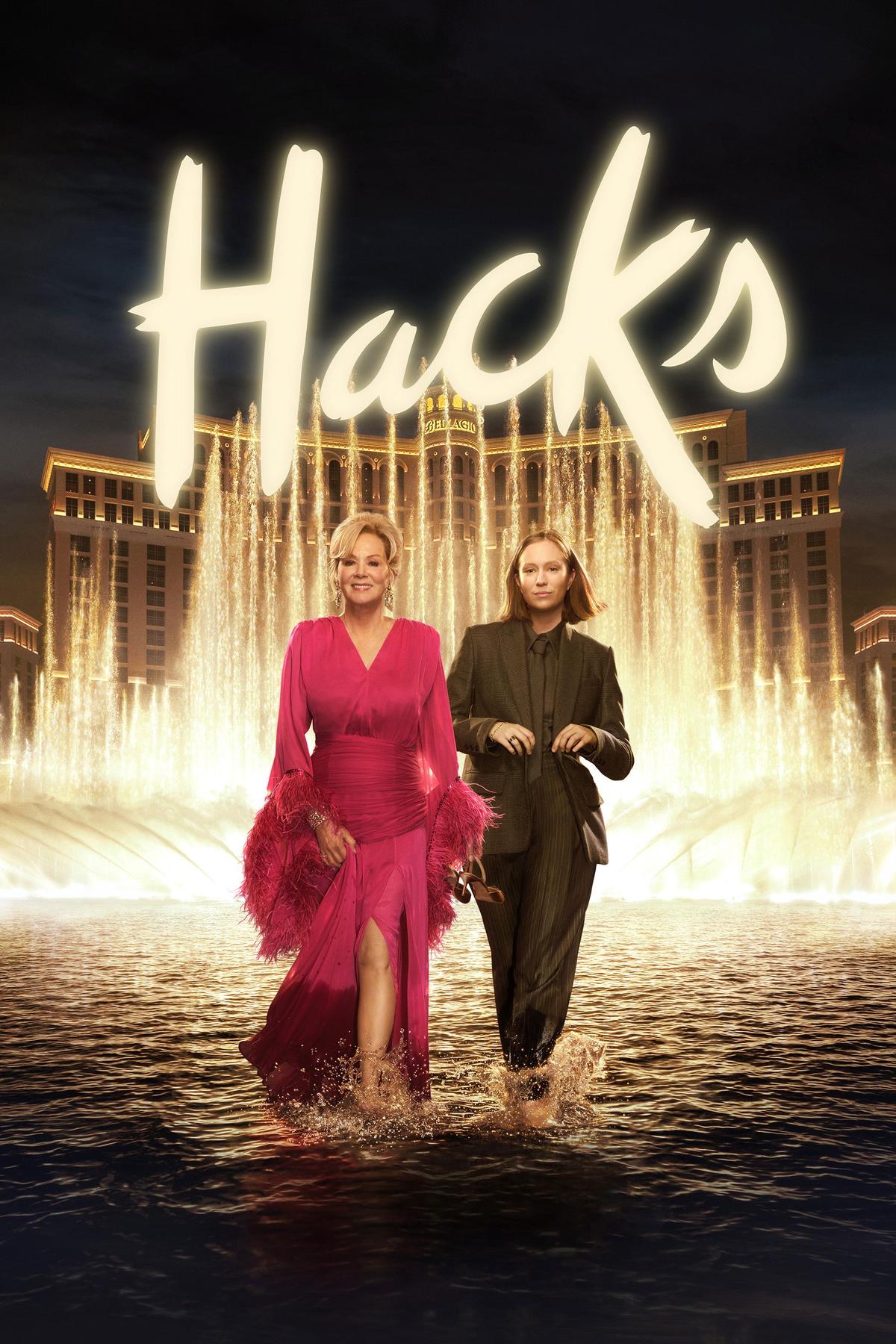
Well, the main characters of Hacks are also trapped. Not by their situation, but by themselves. Deborah Vance, an ageing stand-up comedian, coming to the twilight of a highly successful career. Only she doesn't realise that yet and certainly isn't ready for it. She needs a joke writer to help bounce ideas off and polish up quips for when she's cutting the ribbon on a new supermarket. But her agent, Jimmy, is struggling to find someone as nobody wants to work for an act that's so obviously a dead end.
What Jimmy does have on his books is Ava, a young, up and coming comedy writer who is on her way down and going nowhere after being canceled. She posted something stupid, got fired and (as she's not a rich, old, white guy) can't find any work. She's jobless, aimless and lost.
So Jimmy sends her to Deborah. Quelle surprise, they hate each other from the moment they meet, immediately having a blazing row in which Ava resigns and Deborah fires her.
Except that row is funny. Really funny. Funny enough to make Deborah realise that Ava is someone she can use even if she pisses her off. The key word of that last sentence is use. And where else is Ava going to find work? She needs a way to work, to hone her craft and rebuild her reputation.
And thus the trap is set.
Because whilst they both realise they need each other professionally, they actually need each other a whole lot more than either comprehend or will admit. And the moment either of them start to realise how much they depend on the other, one or both recoils, pushes away and then everything collapses again until they can begrudgingly reconcile.
The way the traps are constructed vary in quality. Some are little clunky, others are breathtaking. The final episode of Series 3 is one of the finest constructed cliff hangers ever seen in a sitcom. A series of scenes that winds everything so tight that the explosion is inevitable and still shocking.
And all of those traps are laid by Deborah and Ava themselves. Two people trying to come to terms with a relationship that neither of them asked for, but both need. There are articles to be written about the themes of legacy, mentorship and inter-generational friendships (none of which I'm going to write as I've already spent far too long waffling about sitcoms) as portrayed in Hacks. As in the best comedies, it's richly textured.
Most importantly though, this is funny, funny, funny. Every episode guarantees at least one belly laugh and regular chuckles. Especially as the show starts to get to grips with it's characters and how the actors are playing them. The way the later episodes utilise Hannah Einbinders ability to make goopy eyes at dazzling blondes2 comes from the writers knowing their cast and using them to the fullest.
The fifth and final series lacks the bite of the previous four. The creators have, by this point gotten too fond of their created family. It still contains some of the best episodes of the entire run. However, at the end of the final episode the trap snaps shut again. Everything back as it was at the beginning. But is it even a trap if you are where you want to be?
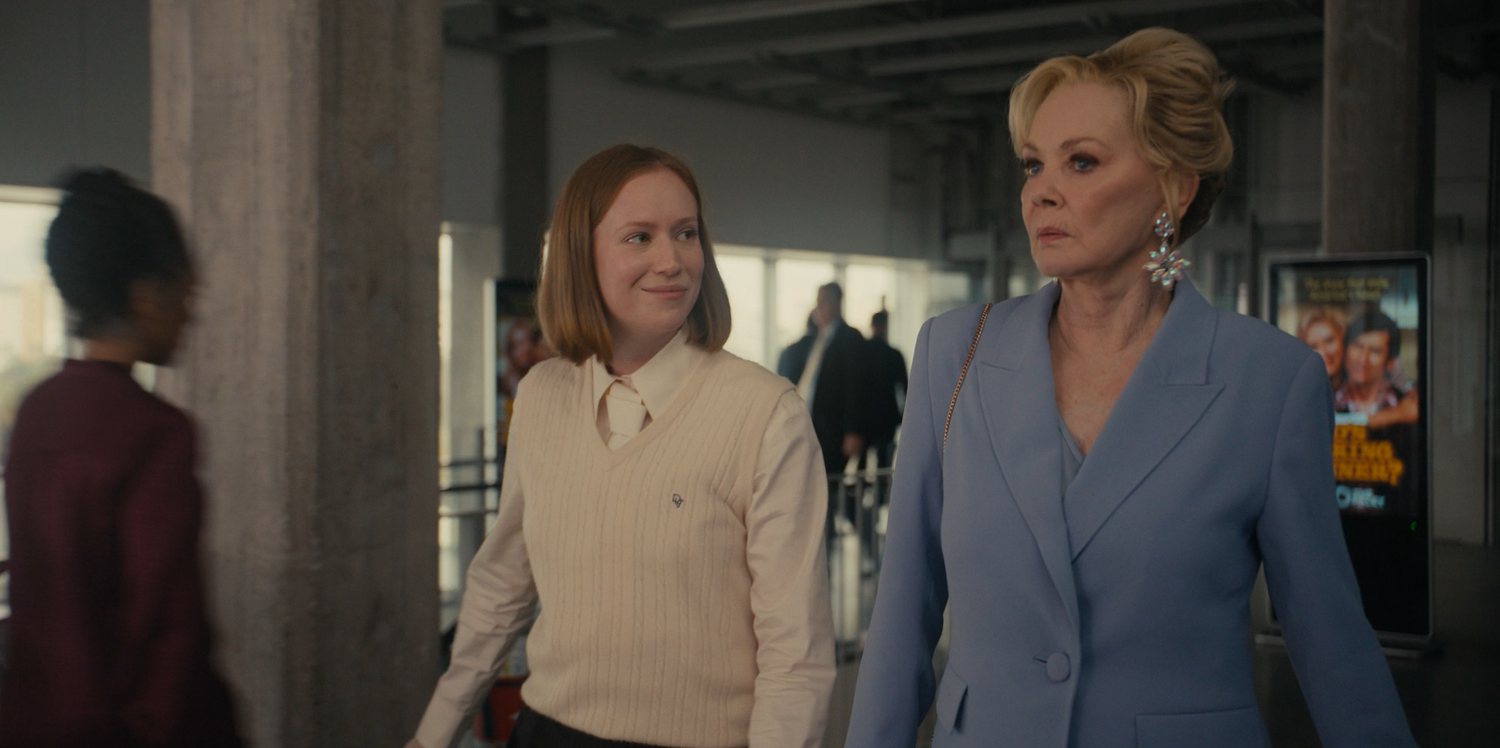
Poster Credit Where to Watch
1. Yes, Father Ted is Irish but it was made by a UK production company for a UK TV station, so it counts. Also, it was half written by someone who went on to become a vile transphobe so make sure you pirate it if you want to watch it.
↩
2. Foreshadowing for a later review.
↩